This campaign is an initiative of Stichting Spots.
Respect wildlife
With the summer holidays just around the corner, lots of people are traveling to distant destinations such as Africa and Asia. Safari trips are high on the wishlist, as are excursions where you can see and touch wild animals, such as lions, cheetahs, and tigers. Responsible safari trips can contribute to nature conservation, but if international codes of conduct are not followed, they can actually have a negative impact on wild animals. And behind excursions involving wild animals often lies a world of animal suffering and illegal trade that you perpetuate by participating.
Here you can read tips on making conscious choices, recognizing animal suffering, and treating wild animals with respect.
Photo: Black Dingo/Shutterstock.com
On safari? Keep your distance and leave wild animals alone
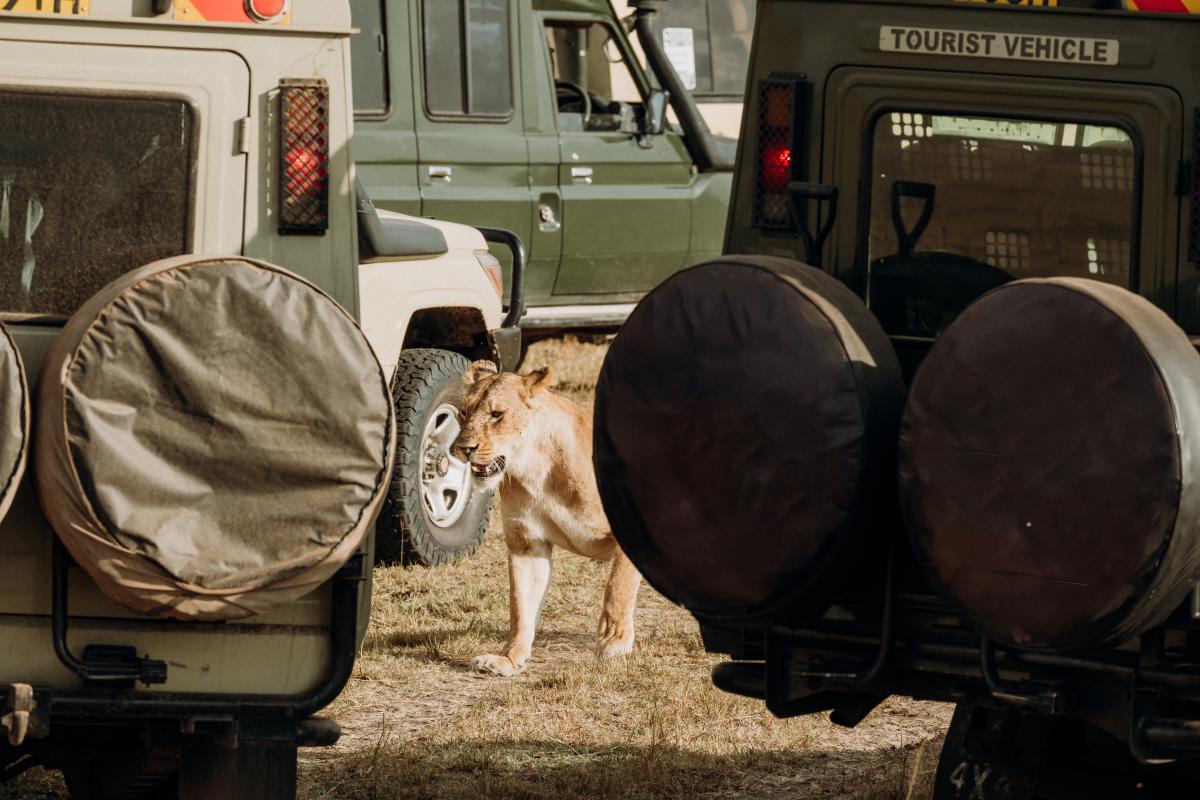
Safari tourism is important for both local communities and wildlife. It generates income that helps preserve natural habitats. In sustainable safari tourism, animals are respected and can maintain their natural behavior, but this is where things often go wrong. Videos are regularly released showing animals being surrounded by safari vehicles or being cut off from their path. This has a negative impact on animals that are often already threatened with extinction.
This is how you go on an animal-friendly safari and contribute to conservation and preservation:
Animal welfare comes first
Do not chase animals or ignore rules because the perfect photo takes precedence over the animal's well-being.
Wild animals come first
Never block an animal’s path or cut off its escape route, give them space. When you spot wildlife, be sure to leave enough space for other vehicles to view the animal as well, so guides don’t have to compete for a clear sighting.
Keep your distance from wild animals
Every park has its own rules regarding the distance you must keep. Make sure you are aware of the park rules and adhere to them. Of course, it is possible that an animal will come closer on its own. In that case, stop driving and ask your guide to switch off the engine.
Leave animals at peace
Never feed wild animals. Animals become dependent on it and can get sick. It is tempting to get an animal to look into your lens by making noises for example. It seems harmless, but these kinds of actions disrupt their natural behavior and cause them to get used to humans and lose their instinctive fear. That makes them easy prey for poachers.
Stay in the car
Only get out at designated places, such as official picnic areas and toilets. Never leave the road and do not drive straight through the terrain.
Do not pressure your guide
Requests to get closer or to follow an animal can put your guide in a challenging situation, especially if they are relying on tips. Don’t hesitate to let your guide know if you prefer not to join a crowded group of vehicles.
Report irresponsible behavior
Reputable travel organizations strive to make safari trips as responsible and respectful as possible. If you experience any problems during your safari, be sure to inform your travel company. They can address the issue with their local partners and/or the guide involved. If you observe irresponsible behavior from other visitors, report it to the park authorities to help protect the wildlife and the environment.
Wild animals are not tourist excursions
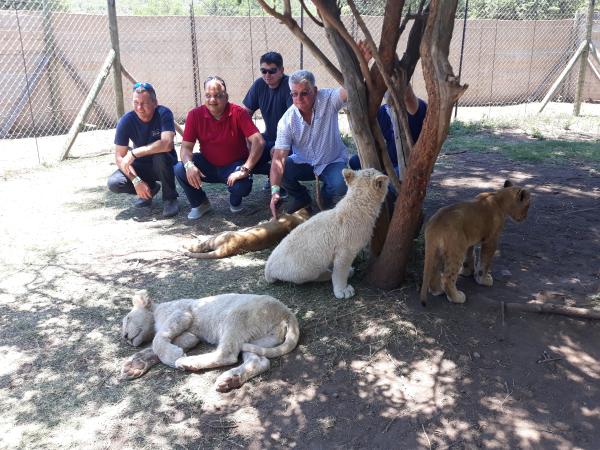
It is on many bucket lists: having contact with wild animals. That is why worldwide, excursions are being offered in which you can interact with wild animals, including big cats such as lions, tigers, and cheetahs. For example, you can bottle-feed cubs, take photos and/or selfies with the animals or walk with them.
Often people who participate in such excursions, are animal lovers. And they are often unaware that behind these kinds of excursions, is animal suffering. As well as illegal trade that puts animals in the wild under even more pressure.
Here are some reasons why you should not participate in excursions with wild animals:
It is animal cruelty
To accustom wild animals to humans, they are often prematurely separated from their mothers. This is animal cruelty because normally, mother and offspring mostly stay together for a long time (e.g. a lioness and her cub stay together for 1,5 year).
To keep a constant supply of cubs—which are seen as the safest and most appealing—the animals are bred continuously.
It is animal abuse
Wild animals are not naturally suited to human interaction. As a result, they are frequently subjected to harsh training methods to force them into obedience and tameness. Additionally, they are often confined to small, inadequate spaces where their well-being and natural needs are neglected.
It often leads to poaching and illegal trade
It is common practice that wild animals are taken from the wild for these types of excursions and interactions. Upon reaching adulthood, the animals often end up in the illegal trade or are killed immediately.
It poses a risk of diseases and accidents
Direct contact with wild animals increases the chance of the transmission of zoonoses (diseases that jump from animals to humans). Wild animals are also unpredictable, which can lead to dangerous situations. Things regularly go wrong during excursions, resulting in people being attacked or injured by wild animals.
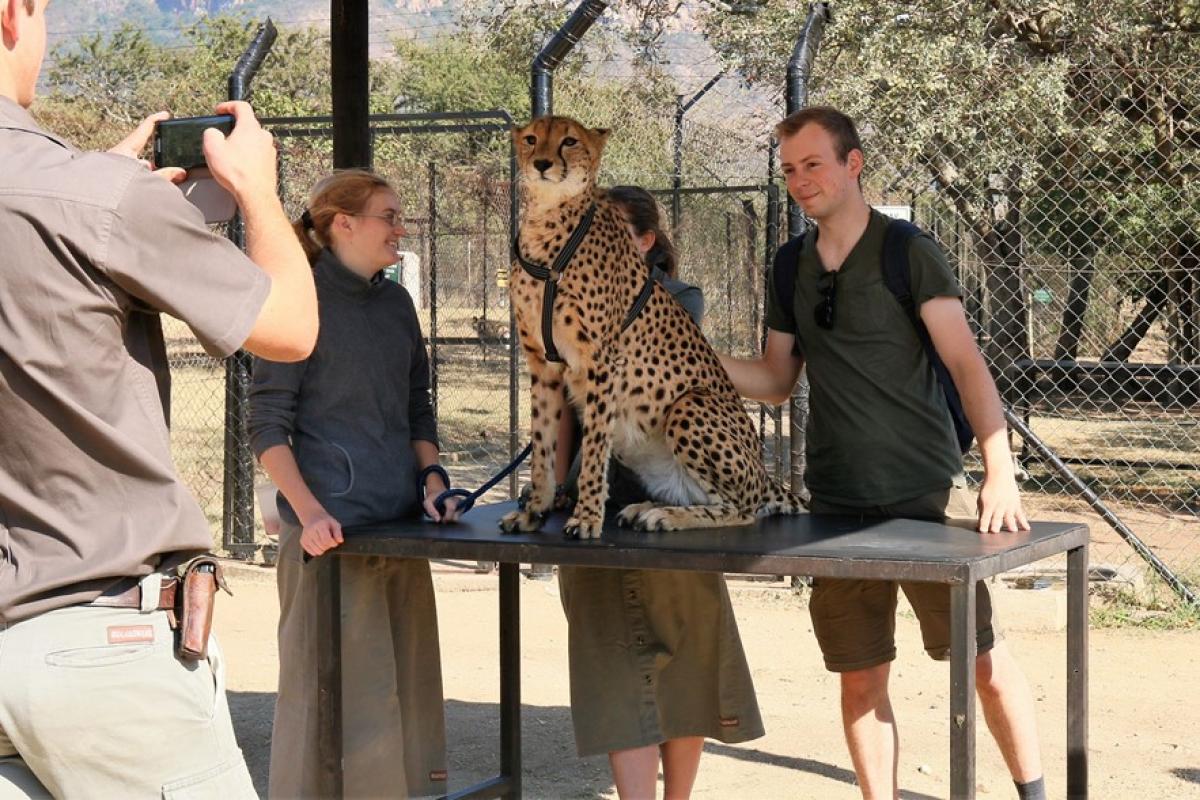
Behind a photo with a wild animal, such as the cheetah shown here, lies a world of animal suffering and often illegal wildlife trade.
How to recognize animal abusive excursions
As a general rule, if you are allowed to pet, hold, or take photos with (young) wild animals, it is a clear warning sign. The same applies if you can swim, walk, or ride wild animals, such as elephants. Another red flag is the constant presence of young animals available for interaction, which often indicates a breeding practice. True sanctuaries never breed wild animals.
The Association of British Travel Agents (ABTA) has created Animal Welfare Guidelines, in which activities are listed that have been classified as unacceptable. This helps you to recognize animal abusive excursions immediately.
The Tiger Temple
Photo: KAMONRAT/Shutterstock.com
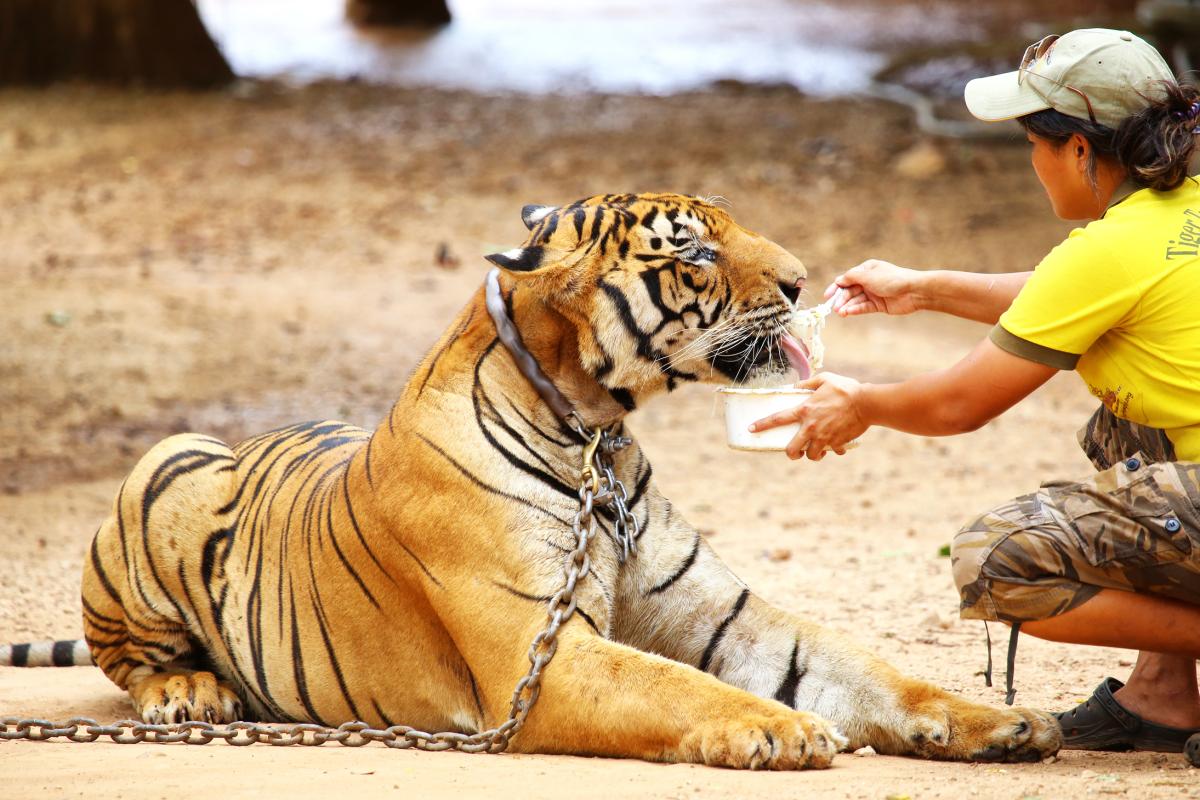
The ‘Tiger Temple’ in Kanchanaburi, Thailand, was once world-renowned as a genuine sanctuary for tigers. However, it was later revealed to be an illegal breeding operation. While the monks profited greatly from tourist visits, they also made substantial income by selling adult tigers into the illegal trade. Tigers are highly valued in certain practices of traditional Chinese medicine (TCM) as their body parts are thought to be healing against certain diseases.
The king of animals is not a tourist excursion
Big cats, and certainly the lion, capture our imagination. Many people therefore dream of having an ‘up close and personal’ experience with this animal. Unfortunately, this has led to a ruthless industry in which the King of animals is exploited from birth to death.
Bred for tourists and consumers
Lions used in excursions are almost always bred specifically for this purpose. To make them accustomed to human contact, they are taken from their mothers at a very young age. This is an act of animal cruelty, since lion cubs typically stay with their mothers for about a year and a half. As a result, these cubs become completely dependent on humans, making them ideal for paying tourists and volunteers who can pay to bottle-feed them or take photos with the adorable cubs. Because young animals are the least dangerous and most appealing, there is a constant demand for cubs, driving continuous breeding to ensure a steady supply.
In South Africa alone, there are now approximately 8,000 bred lions. Other countries are now copying this business model. For example, in Mauritius and Zimbabwe, you can walk with lions and cheetahs. And in Thailand, cafes offer visitors the opportunity to play with lion and tiger cubs and have their picture taken.
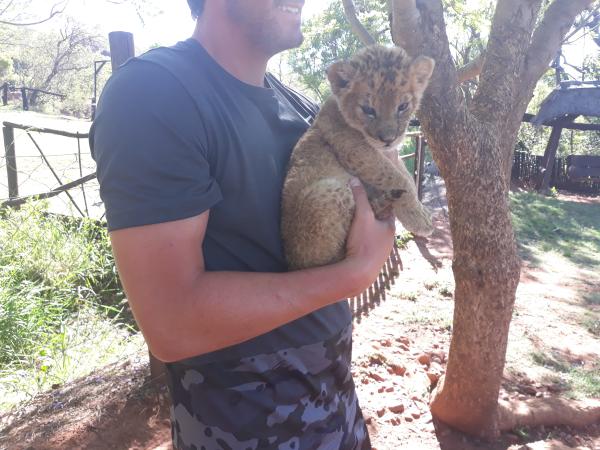
A very young lion cub is super cute. But this little animal has been taken away from his mother, with whom he normally stays for about a year and a half. This is simply animal cruelty.
Also an animal welfare problem
The animals used in these types of attractions, do not have a pleasant life. To meet the constant demand for cubs, continuous breeding is required. The lionesses involved are essentially turned into battery cages. Their cubs are taken away soon after birth to force them back into estrus quickly, allowing for frequent, unnatural pregnancies that benefit the breeder financially, but seriously harm the lioness’s health.
The cubs themselves also suffer greatly. Normally, young animals spend much of their time sleeping and staying close to their mothers, but now they are constantly handled and displayed to tourists, causing significant stress.
As cubs grow older, they are often subjected to punishment through pain and fear to suppress any aggressive (wild) behaviors. Many facilities confine these animals to cramped, barren enclosures without sunlight, often with concrete floors and poor-quality food, further worsening their physical and mental well-being.
The young lion cubs would normally sleep a lot. But now they are constantly being picked up and petted by tourists.
Sad ending for the once petted cub
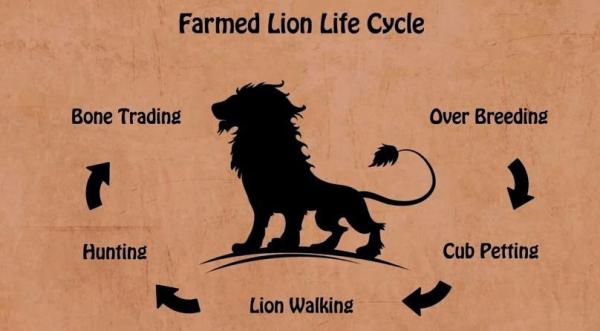
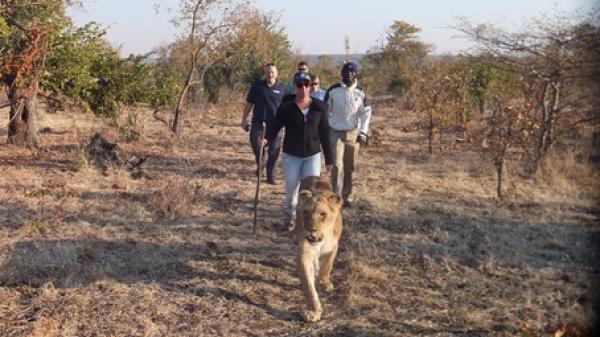
Eventually, the once-adorable cub grows less cute and is no longer suitable for cuddling. At this point, they are often used in walking safaris in Africa. When these excursions are no longer viable, the animals simply disappear—usually returning to the breeder. There, they wait to be sold to hunters who pay to shoot the lions on demand. Because these lions have been accustomed to close human contact, they are easy targets. This practice is known as canned hunting, and South Africa is infamous for this industry.
Many bred lions also end up in the illegal trade because their body parts are wanted in traditional Chinese medicine (TCM); it’s believed that some animal parts have healing powers. In South Africa, large-scale lion slaughterhouses have emerged where lions are killed, and their skeletons are exported primarily to Asia.
Once the lions are a little older, they are often used for walking safaris.
Want to know more about the captive breeding industry of lions? Then take a look at this website, lionpetting.com/english/.
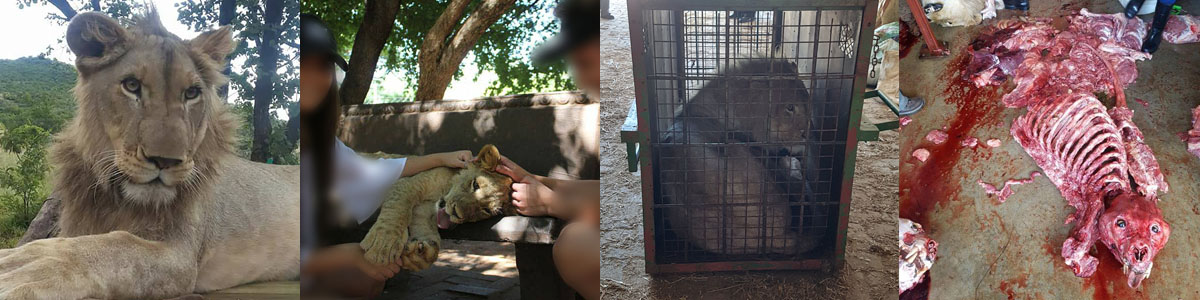
Jabula was a lion bred in captivity in South Africa. He was separated from his mother at a very young age and soon ended up at a tourist attraction where visitors could pay to have their photo taken with the adorable cub.
After about seven months, Jabula became less cuddly and more dangerous. Often, this is when lions are used for walking tours. The breeder however decided not to use Jabula for this purpose. The now subadult lion became a financial burden without generating any income. As a result, another method had to be found to profit from Jabula.
One day, people arrived at his enclosure. Because of constant human contact, Jabula was used to people and sensed no danger. This made it easy to lure him, sedate him, and transport him to a so-called lion slaughterhouse. Jabula’s caretaker alerted the South African animal protection agency, which inspected the facility and found Jabula confined to a cage far too small for him. Unfortunately, this practice is completely legal in South Africa and the animal protection agency could do little else but to document everything.
Eventually, Jabula was shot and skinned. The skeletons of dozens of lions killed that day, including Jabula’s, were shipped to Asia. There, they were likely processed into medicinal wine as a substitute for tiger bone wine. In certain traditional medicines—especially traditional Chinese medicine (TCM)—wild animal parts are used because they are believed to possess healing properties.